
Category: Guides

  • Planning a Golf Week in Los Cabos: Courses, Order and Travel Times

    Planning a Golf Week in Los Cabos: Courses, Order and Travel Times

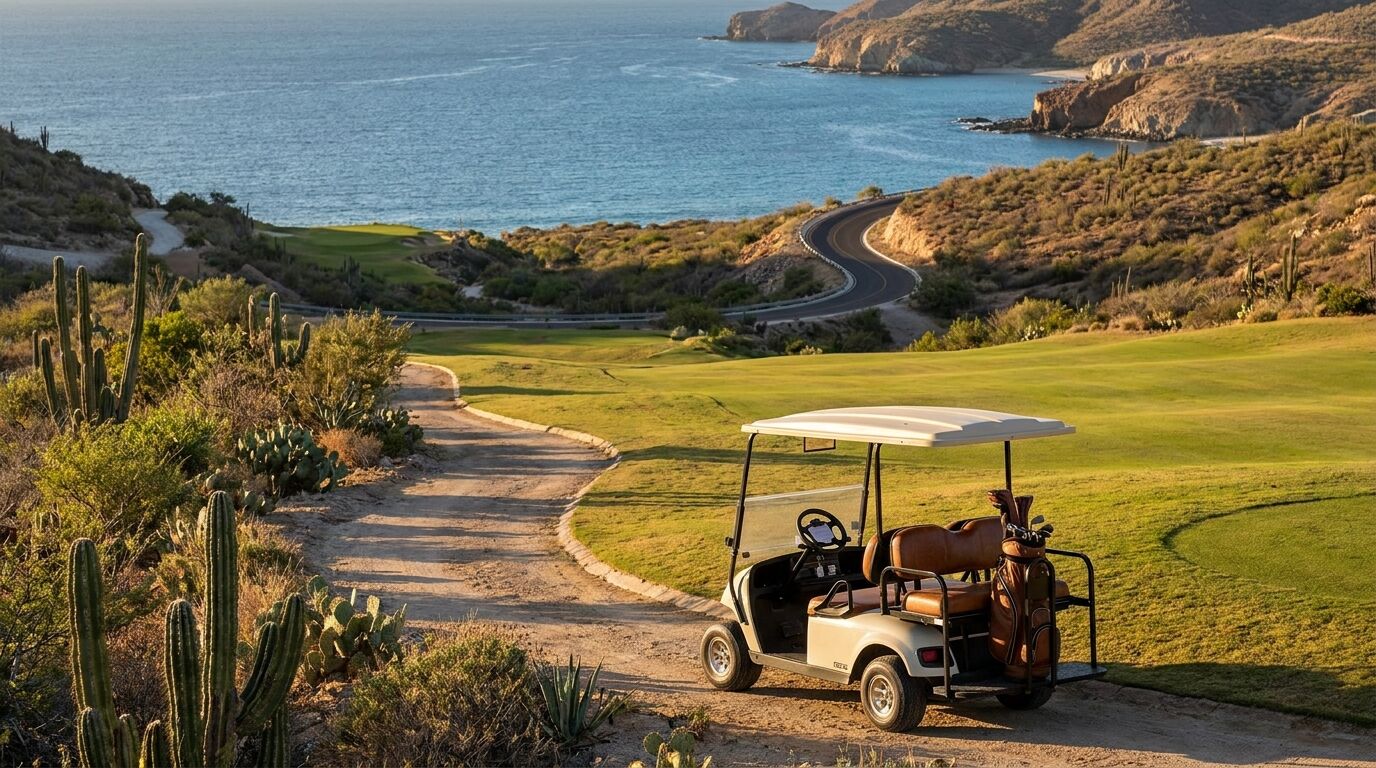
    Golf cart on a desert cart path at sunrise in Los Cabos

    Los Cabos Golfing · Journal

    The Journal

    Planning a Golf Week in Los Cabos: Courses, Order and Travel Times

    A practical framework for a week of golf in Los Cabos: where to stay, how to sequence the courses, realistic drive times and how to keep the week enjoyable.

    A week of golf in Los Cabos can be one of the great golf trips, provided the logistics are as considered as the course list. The region is compact, but its courses stretch from the Pacific dunes north of Cabo San Lucas to the East Cape, and a poorly sequenced week can mean more time in a car than on a fairway. A little planning keeps the focus on the golf.

    This guide offers a framework for a five- or six-round week: where to base yourself, how to order the courses, realistic travel times and how to pace the days.

    Start with your base

    Where you stay determines how far you drive each morning. Los Cabos golfers generally choose between three bases.

    Cabo San Lucas

    Staying in or near Cabo San Lucas puts the Pacific courses close at hand, including Quivira Golf Club, Solmar Golf Links and Cabo San Lucas Country Club. It suits groups who want restaurants and nightlife within easy reach. The trade-off is a longer drive from the international airport at San José del Cabo.

    The Tourist Corridor

    The Corridor, the coastal stretch between the two towns, is the most central base. Courses such as Cabo del Sol Golf and Cabo Real Golf Club are on the doorstep, and most other courses are within a reasonable drive in either direction. For a golf-first week, this is often the most efficient choice.

    San José del Cabo and Puerto Los Cabos

    San José del Cabo offers a calmer, more traditional town atmosphere and short transfers from the airport. Club Campestre San José, Palmilla Golf Club, Vidanta Golf Los Cabos and Puerto Los Cabos Golf Course are all nearby.

    Realistic travel times

    The main artery is Highway 1, the Transpeninsular, which links San José del Cabo, the Corridor and Cabo San Lucas. Traffic is usually manageable in the early morning, when most golfers travel, but allow more time in the afternoon and around town centres. The figures below are approximate and assume light traffic.

    RouteApproximate drive
    Airport to San José del Cabo15–20 minutes
    Airport to mid-Corridor25–35 minutes
    Airport to Cabo San Lucas40–50 minutes
    San José del Cabo to Cabo San Lucas30–40 minutes
    Cabo San Lucas to Pacific-side courses10–20 minutes
    San José del Cabo to La Ribera (East Cape)around an hour

    Rental cars are widely available, but many golf groups prefer private transport so no one has to drive after a long lunch. A concierge such as Golf Now Los Cabos can coordinate transport alongside tee times.

    Sequencing the courses

    The order in which you play matters almost as much as the courses themselves. A few principles help.

    Ease in on day one

    After a travel day, start with a course that is forgiving and close to your base. The wide fairways at Puerto Los Cabos or a relaxed round in the foothills above San José are good ways to find your rhythm. Keep the most dramatic ocean round for later in the week, when your swing has settled and you can enjoy it fully.

    Group courses by area

    Avoid zig-zagging between the Pacific and the East Cape on consecutive days. Play the Cabo San Lucas courses together, the Corridor courses together and the San José courses together, and move your base mid-week if the itinerary is heavily weighted to one end.

    Vary the landscape

    Alternate between ocean, desert and links-style layouts. A Pacific links round followed by a sheltered desert course gives your game, and your eye, a change of pace.

    Save a highlight for the end

    Many golfers like to finish with a signature round, then a long lunch and a final sunset. It gives the week a natural crescendo.

    A sample six-round week

    • Day 1: Arrive, settle in, and perhaps a short warm-up at a range or simulator studio.
    • Day 2: A forgiving opener in San José del Cabo.
    • Day 3: A Corridor round with desert-to-sea routing.
    • Day 4: Rest day: beach, spa or a morning on the water.
    • Day 5: A Pacific links-style round with an afternoon in Cabo San Lucas.
    • Day 6: An ocean round on the Corridor.
    • Day 7: A signature clifftop round, then a farewell dinner.

    Adjust to taste. Serious golfers sometimes add a second round in the afternoon on the lighter days, while couples often prefer three or four rounds with more time between them.

    Pacing yourself

    The sun in Los Cabos is strong even in winter, and back-to-back rounds take more out of the body than many visitors expect. A rest day in the middle of the week is rarely wasted. Spend it fishing, snorkelling or simply sailing along the coast with one of the charters on Los Cabos Yachting, or book a recovery treatment through the wellness providers on Los Cabos Longevity.

    Meals deserve the same thought. Long clubhouse lunches are one of the pleasures of a golf week here, but a late, heavy dinner before an early tee time rarely helps the next morning’s swing. Many groups settle on one celebratory evening in Cabo San Lucas or the historic centre of San José del Cabo and keep the other nights simple.

    Early tee times also help. Being on the first tee shortly after sunrise means cooler air, quieter courses and afternoons free for everything else.

    Booking tee times

    In the high season, from roughly November through April, the most popular ocean courses book up well ahead. Reserve key rounds as soon as your travel dates are set, and ask whether the course offers packages that include transport, practice balls or replays. Some courses reserve nines or tee times for resort guests or members, so confirm public access when booking.

    If you would rather not travel with clubs, arrange rentals before you arrive. Services such as Cabo’s Golf Club Rentals deliver to hotels and homes, so the bag is waiting when you check in.

    Thinking longer term

    Golfers who come back year after year sometimes find that a week no longer feels long enough. Owning a home near the courses changes the pace entirely: no need to cram rounds together, and the freedom to play when conditions are at their finest. Our page on owning a home in Los Cabos explains how buyers typically approach golf communities here.

    Planning tips

    • Choose your base first, then build the course list around it.
    • Group courses by area and avoid long cross-region drives on consecutive days.
    • Start with a forgiving course and finish with a signature round.
    • Build in at least one rest day for a longer trip.
    • Book high-season ocean rounds as early as possible and confirm public access.
    • Arrange transport and club rentals before you land.

    A well-planned golf week in Los Cabos feels unhurried even with a round every day. Get the base, sequence and logistics right, and every morning starts with nothing more pressing than the first tee shot.

    This guide is for general information. Details change, so please confirm specifics directly with each business. More from the Journal →
  • The Courses of Los Cabos by Setting: Ocean, Desert and Links

    The Courses of Los Cabos by Setting: Ocean, Desert and Links

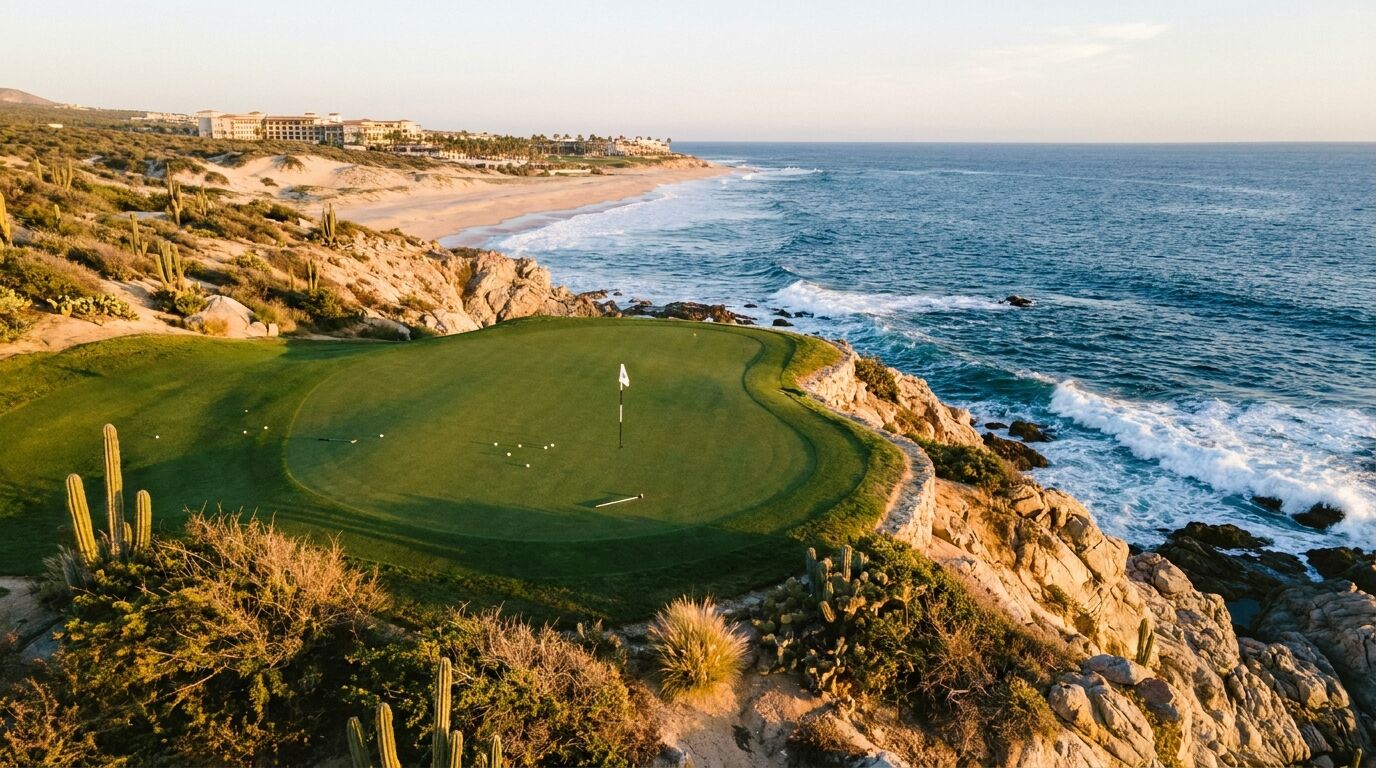
    Clifftop golf green above the Pacific in Los Cabos

    Los Cabos Golfing · Journal

    The Journal

    The Courses of Los Cabos by Setting: Ocean, Desert and Links

    Los Cabos golf spans clifftop ocean holes, desert canyons and wind-shaped Pacific links. A guide to the region's courses by landscape, and what each setting asks of your game.

    Few golf destinations pack as much variety into as short a stretch of coastline as Los Cabos. Within roughly an hour’s drive, you can play holes that skirt the beaches of the Sea of Cortez, climb through granite and cactus in the desert foothills, and wind among towering Pacific dunes where the wind decides the club. Choosing courses by setting, rather than by name alone, is the most reliable way to build a trip that feels varied and suits your game.

    This guide groups the region’s courses into three broad landscapes. Many layouts blend more than one, but each has a dominant character that shapes the experience.

    Understanding the geography

    Los Cabos sits at the southern tip of the Baja California peninsula, where the Pacific Ocean meets the Sea of Cortez. Cabo San Lucas faces both waters, with the Pacific coast running north toward Todos Santos. The Tourist Corridor follows the Sea of Cortez east to San José del Cabo, and beyond that lie Puerto Los Cabos and the quieter East Cape.

    The two bodies of water behave very differently. The Sea of Cortez side is calmer and warmer, which is why the Corridor is lined with resorts and swimmable bays. The Pacific side is wilder, cooler and breezier, with broad beaches and dramatic dunes. Golf courses reflect those contrasts directly.

    Ocean courses: the Sea of Cortez and the clifftops

    The image most golfers carry of Los Cabos is a green set against blue water, and the region delivers that in abundance. The ocean courses are the most photographed and, for many visitors, the reason to come.

    Along the Corridor

    The Ocean Course at Cabo del Sol Golf is one of the region’s most recognised layouts, with a Jack Nicklaus routing that runs along beaches and rocky points of the Sea of Cortez. Further east, Palmilla Golf Club combines canyon holes with long views to the water, and has a long-standing place in the history of golf in the destination. Private clubs on the Corridor, including Querencia Golf Club and Chileno Bay Club, are known for sea views from much of the course.

    On the Pacific clifftops

    On the Pacific edge of Cabo San Lucas, Quivira Golf Club is laid across granite headlands and dunes, with holes that play along and above the cliffs. It is a round of elevation and drama, with the ocean as a near-constant companion.

    What to expect: spectacular scenery, a strong sense of occasion and, often, higher demand for tee times. Ocean holes can be exposed to the breeze, and missing on the wrong side is rarely forgiving.

    Desert courses: canyons, arroyos and foothills

    Inland from the coast, the land rises into desert foothills cut by arroyos, the dry riverbeds that carry water only after rare heavy rain. Courses here weave through cardón cactus, palo verde and rock, often climbing to elevated tees with sweeping views back to the sea.

    Above San José del Cabo, Club Campestre San José is a Nicklaus design in the foothills, with arroyos framing the fairways and views down to the water from the higher holes. On the Corridor, Cabo Real Golf Club climbs into the desert hills before returning toward the Sea of Cortez, giving the round a strong desert-to-sea progression. Closer to town, Cabo San Lucas Country Club sits on gentle inland slopes with views toward Land’s End.

    Several of the private clubs also have strong desert character. Twin Dolphin Club unfolds across desert ridges and arroyos above Santa María Bay, while El Dorado Golf & Beach Club moves between canyons and the coastline.

    What to expect: target golf over native terrain, elevation changes that affect club selection, and often a calmer, more sheltered round than the coastal layouts. Accuracy matters more than raw distance.

    Links-style courses: dunes and wind on the Pacific

    The Pacific coast north of Cabo San Lucas offers something unusual in Mexico: links-style golf among natural dunes. These courses play firm and are shaped by the breeze, rewarding golfers who enjoy running the ball along the ground and adapting from one day to the next.

    Solmar Golf Links, a Greg Norman design at Rancho San Lucas, moves through dunes, desert and open coastline where the wind becomes part of the strategy. Within the private Diamante community, Diamante Dunes Golf Course is built among large natural sand dunes alongside the ocean, with a traditional links feel and a caddie culture to match. Its neighbour, El Cardonal at Diamante, takes a more inland, strategic approach with wide corridors and contoured greens.

    What to expect: wide views, firm turf, constant breeze and a premium on imagination. Scores vary with the weather more than on any other type of course in the region.

    Settings at a glance

    SettingWhereCharacterSuits
    OceanTourist Corridor, Pacific clifftopsWater views, exposed holes, sense of occasionBucket-list rounds, photographers, special occasions
    DesertSan José foothills, inland Corridor, Cabo San LucasArroyos, elevation, target golfAccurate players, calmer conditions, residents
    Links-stylePacific coast north of Cabo San LucasDunes, firm ground, windShot-makers, golfers who enjoy variety day to day

    Beyond the main corridor

    East of San José del Cabo, Puerto Los Cabos Golf Course combines Nicklaus and Norman nines across rolling terrain with views toward the Sea of Cortez, offering a mix of desert and ocean in a quieter setting. Further up the coast at La Ribera, Costa Palmas Golf Club runs through native desert and palm groves beside calm water on the East Cape, a world away from the bustle of the Corridor.

    Choosing a mix

    For a balanced trip, most golfers do well to include at least one round from each landscape. A typical combination might be an ocean round on the Corridor, a desert round in the foothills above San José, and a links-style round on the Pacific. The contrast keeps every day fresh, and you will come away with a fuller picture of the destination.

    The setting of a course often becomes the setting of a life, too. Many of the region’s golf communities have homes overlooking the fairways, and buyers often choose between ocean, desert and Pacific living in much the same way golfers choose a course. Our guide to owning a home in Los Cabos looks at how those settings translate into everyday life.

    Before you go

    • Decide which settings matter most to you, then build the itinerary around them rather than around names alone.
    • Expect more wind on the Pacific and links-style courses, especially in the afternoon.
    • On desert layouts, take an extra moment with elevation changes and favour accuracy over distance.
    • Remember that some courses are private; check the access notes in our private clubs and golf communities section before planning.
    • Bring a camera, or at least a charged phone, for the ocean holes.

    Ocean, desert or dunes, each landscape in Los Cabos reveals a different side of the peninsula. Play across all three and you will understand why golfers return here year after year.

    This guide is for general information. Details change, so please confirm specifics directly with each business. More from the Journal →

  • When to Golf in Los Cabos: A Season-by-Season Guide

    When to Golf in Los Cabos: A Season-by-Season Guide

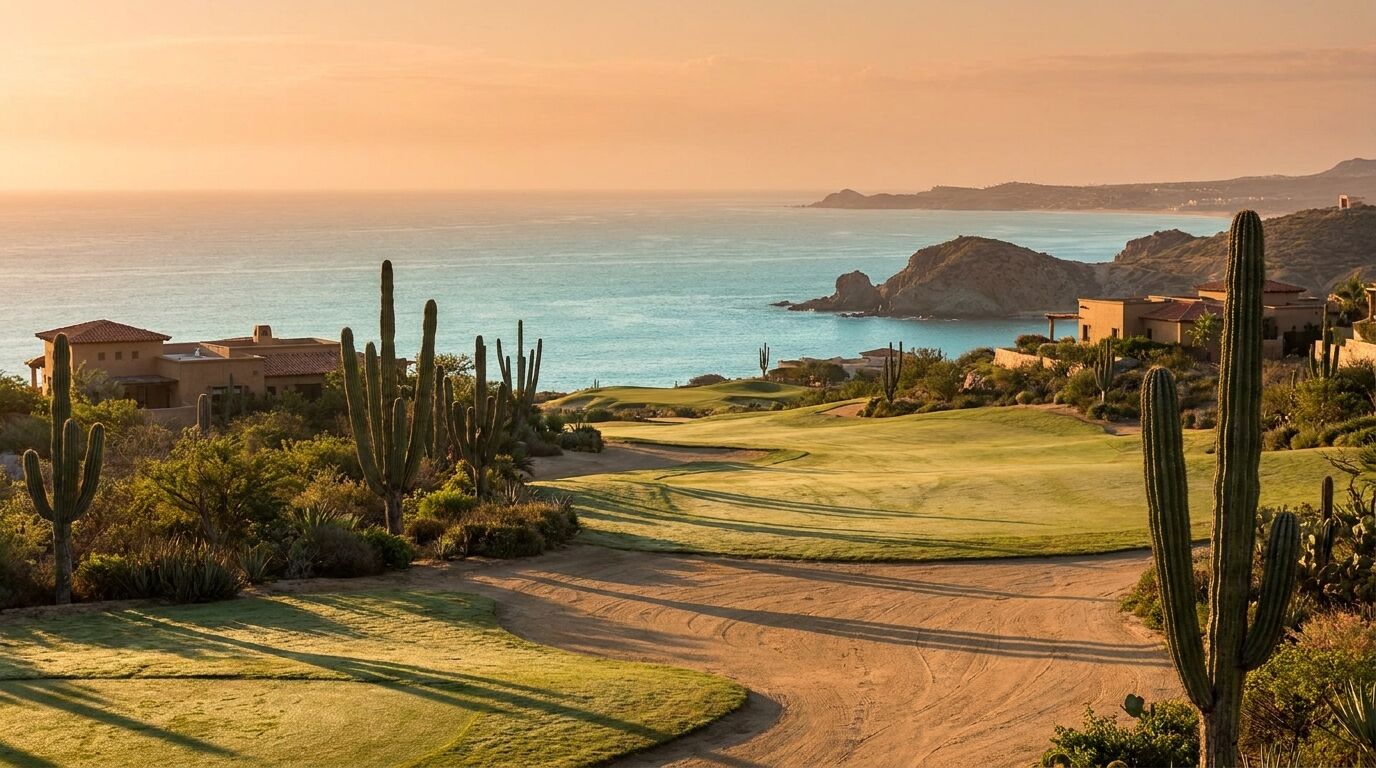
    Morning light on a Los Cabos golf fairway above the sea

    Los Cabos Golfing · Journal

    The Journal

    When to Golf in Los Cabos: A Season-by-Season Guide

    Cabo is a year-round golf destination, but each season plays differently. How weather, wind and the calendar shape your rounds, and how to plan around them.

    Los Cabos is one of the few places in the world where golf is genuinely a twelve-month proposition. Rain is rare, the sun is reliable and the courses stay open all year. Yet the experience of a round in January is very different from one in August, and understanding the rhythm of the seasons is the simplest way to make a golf trip feel effortless.

    This guide walks through the year as golfers experience it: temperature, humidity, wind, course conditions and the practical choices that follow, from tee-time hours to which side of the peninsula to favour.

    The shape of the Los Cabos year

    The southern tip of Baja California Sur has a desert climate with two broad seasons. The dry season runs roughly from November through May, with warm, sunny days, low humidity and cool evenings. The warmer, more humid season runs from June through October, when daytime heat builds and the official tropical storm season is underway, typically at its most active in late summer and early autumn.

    Within those two halves are the nuances that matter on the course. The Pacific coast, home to courses around Diamante and Rancho San Lucas, is generally cooler and breezier than the sheltered Sea of Cortez side. The Tourist Corridor and San José del Cabo sit on the gentler Sea of Cortez, where calmer water and warmer air are the norm.

    Winter: the classic golf season

    From December through March, Los Cabos offers the conditions most visiting golfers picture: clear skies, comfortable temperatures through the middle of the day and fresh mornings that occasionally call for a light layer on the first few holes. Low humidity means the ball flies predictably and walking or riding the full eighteen is comfortable at any hour.

    This is also the busiest period for travel, which has a few consequences. Tee times at the most sought-after ocean courses, such as the Ocean Course at Cabo del Sol Golf and the clifftop holes at Quivira Golf Club, are worth reserving well ahead, particularly around the year-end holidays and North American school breaks. Morning slots go first.

    Winter is also whale season. Grey and humpback whales travel through local waters, and it is not unusual to see spouts from an elevated tee box. If you want a dedicated day on the water to see them up close, the charter operators listed on Los Cabos Yachting make an easy pairing with a golf itinerary.

    Wind in winter

    The northerly winds that blow down the Sea of Cortez in winter can freshen the afternoons on the Corridor and around San José del Cabo. On the Pacific side, the prevailing breeze is a constant feature of the links-style layouts such as Solmar Golf Links. Golfers who prefer still air tend to book early; those who enjoy shaping shots in the wind often find the afternoons the most rewarding.

    Spring: long days and settled weather

    April and May are often described by residents as the sweet spot. The winter crowds thin after Easter, the days are long and the weather is consistently dry and warm. Courses are typically in excellent condition after the busy season, and tee sheets open up, which makes it easier to secure preferred times without much notice.

    Temperatures climb steadily through May, so the comfortable window shifts earlier in the day. A first tee time around sunrise allows a full round before the warmest hours, with lunch in the clubhouse to follow.

    Summer: heat, humidity and quiet fairways

    From June through September, Los Cabos is hot, and the humidity rises noticeably from midsummer. This is the low season for golf travel, and for the right golfer it has real appeal: quiet tee sheets, relaxed pace of play and a calmer atmosphere at the clubs.

    Playing well in summer is about timing and preparation:

    • Tee off at first light. Most experienced summer golfers aim to be on the first tee as early as the course allows and finish by late morning.
    • Consider the twilight round. A late afternoon start, finishing around sunset, can be pleasant when the heat begins to ease.
    • Favour the Pacific side. The ocean breeze on the western coast can make a meaningful difference to comfort.
    • Hydrate constantly. Many clubs have comfort stations on the course; use every one of them, and carry electrolytes.
    • Play nine. Shorter formats, such as the nine-hole layout at Vidanta Golf Los Cabos, fit neatly into a summer morning.

    Some courses schedule maintenance, including overseeding and green renovation, during the quieter months. It is always worth asking about course condition when booking a summer round.

    Indoor golf as a summer ally

    When the afternoon heat makes outdoor practice impractical, air-conditioned simulator studios such as Cabo Golf Club in Cabo San Lucas offer a way to keep the swing sharp, take a lesson or simply play a few virtual holes with friends.

    Autumn: storm season and the return of the crowds

    September and early October form the most unsettled part of the year. Tropical storms and occasional hurricanes can affect the region, and while many weeks pass without incident, flexibility is wise. Travel insurance and a willingness to shift a tee time are sensible precautions.

    By late October and November, conditions improve markedly. Humidity drops, the courses are refreshed after summer and the high season resumes. November in particular combines warm, dry days with tee sheets that have not yet reached their winter peak.

    A quick comparison

    PeriodConditionsGolf considerations
    November–MarchDry, sunny, comfortable; cooler morningsPeak demand; reserve ocean courses early; winter breezes in the afternoons
    April–MayDry, warm, long daysExcellent conditions, easier tee times; start earlier as May warms
    June–AugustHot, increasingly humidQuiet courses; first-light or twilight rounds; possible maintenance
    September–OctoberHot, humid, storm seasonStay flexible; conditions improve quickly from late October

    Matching season to setting

    Because the region’s courses span the Pacific coast, the Corridor and the San José del Cabo foothills, you can adjust where you play to suit the season. In the cooler months, the elevated layouts above San José, including Club Campestre San José, are a pleasure throughout the day. In summer, Pacific-side rounds and early starts make the biggest difference. Our full directory of golf courses open to visitors notes where each course sits so you can plan accordingly.

    Living with the seasons

    Many people who first come to Los Cabos for winter golf eventually find themselves wondering what it would be like to spend whole seasons here, and to know the courses the way residents do. Those who own homes tend to settle into a pattern: long stays through the dry months, perhaps a quieter visit in late spring, and the summer left to the locals. If that rhythm appeals, our overview of owning a home in Los Cabos explains how buyers approach golf communities and seasonal living.

    Planning tips

    • Book winter and holiday tee times early, especially for morning starts on ocean courses.
    • In April and May, take advantage of excellent conditions and greater availability.
    • From June onward, plan first-light rounds and keep afternoons for the pool or indoor practice.
    • Between late August and mid-October, build flexibility into travel plans and consider insurance.
    • Ask each course about any scheduled maintenance before confirming a summer or early-autumn booking.
    • A concierge such as Golf Now Los Cabos can help match courses and tee times to the season.

    There is no wrong time to golf in Los Cabos, only different versions of the same remarkable setting. Choose the season that suits your pace, set your tee times around the sun and the breeze, and the desert and the sea will do the rest.

    This guide is for general information. Details change, so please confirm specifics directly with each business. More from the Journal →